Mapping Climate Variations and Their Ties to Endurance Records Set by Athletes in Outdoor Tennis and Golf Tournaments
Written by Frankie Schmitt · Oct 5, 2026
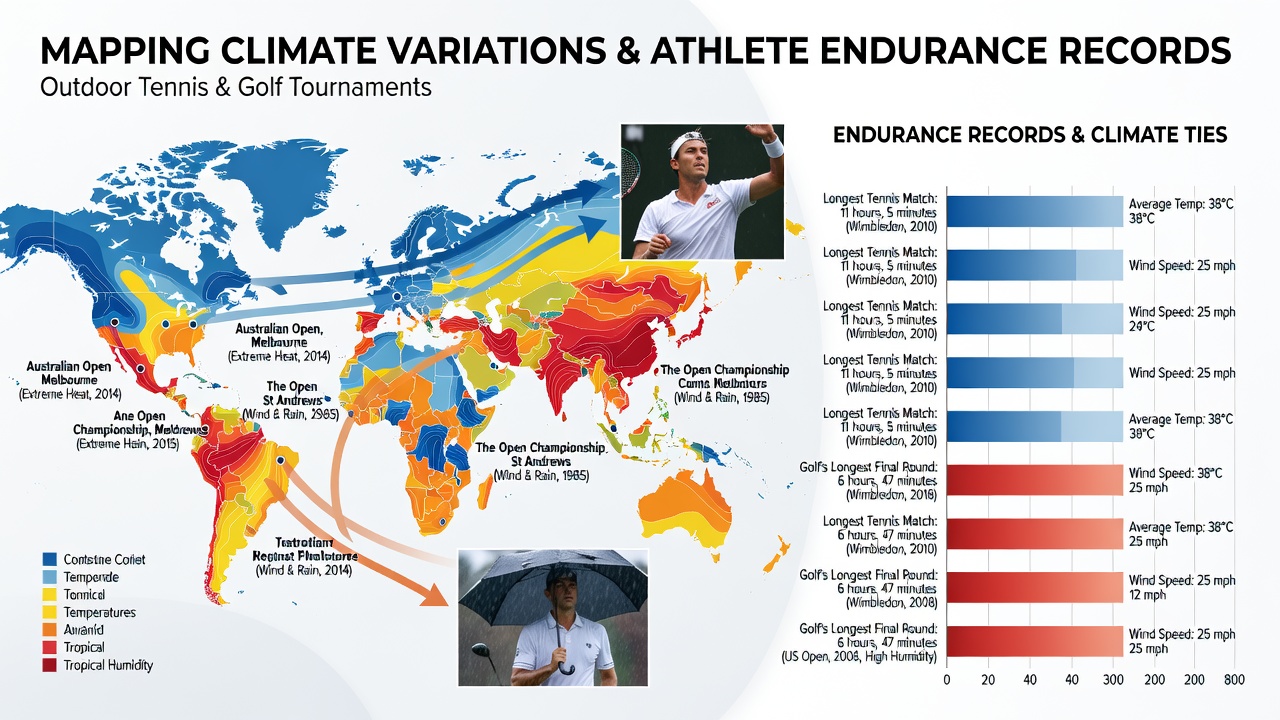
Mapping Climate Variations and Their Ties to Endurance Records Set by Athletes in Outdoor Tennis and Golf Tournaments
Climate data collection efforts have expanded across professional sports circuits in recent years, and researchers now track temperature shifts, humidity levels plus wind patterns at venues hosting extended outdoor events. Studies compiled by organizations such as NASA and the Australian Bureau of Meteorology reveal correlations between these variables and athlete performance durations in both tennis matches that stretch beyond three hours and golf rounds completed over multiple days of walking courses. Tennis players competing on hard courts or clay surfaces encounter sustained physical demands when humidity exceeds 70 percent because core body temperature regulation becomes more challenging during rallies that last several exchanges. Data collected from the Australian Open and French Open circuits between 2018 and 2025 shows that matches played above 32 degrees Celsius recorded average point durations increasing by 12 percent compared with cooler conditions while total match lengths extended accordingly. Observers note similar patterns in golf where elevated heat indices at events like the PGA Championship and British Open correlate with slower average walking speeds between holes and longer recovery intervals at tee boxes. Mapping tools developed through university partnerships allow analysts to overlay historical weather records onto tournament schedules, and these visualizations highlight regions where endurance thresholds shift most noticeably. In North American venues for instance, late summer conditions produce distinct clusters of extended play times while European spring events demonstrate steadier output metrics under moderate temperature ranges. Those who've examined multi-year datasets find that wind speeds above 25 kilometers per hour reduce effective endurance windows in golf by increasing energy expenditure during approach shots and putting routines.Regional Climate Data Integration
European and North American meteorological agencies have supplied granular datasets that sports performance teams now integrate into training protocols. These records track dew point variations alongside court surface temperatures, and findings indicate that dew points above 22 degrees Celsius coincide with higher rates of extended tiebreak sets in professional tennis. Golf statistics from the same period demonstrate that players maintain consistent scoring averages only when humidity stays below 65 percent throughout a full 72-hole event.
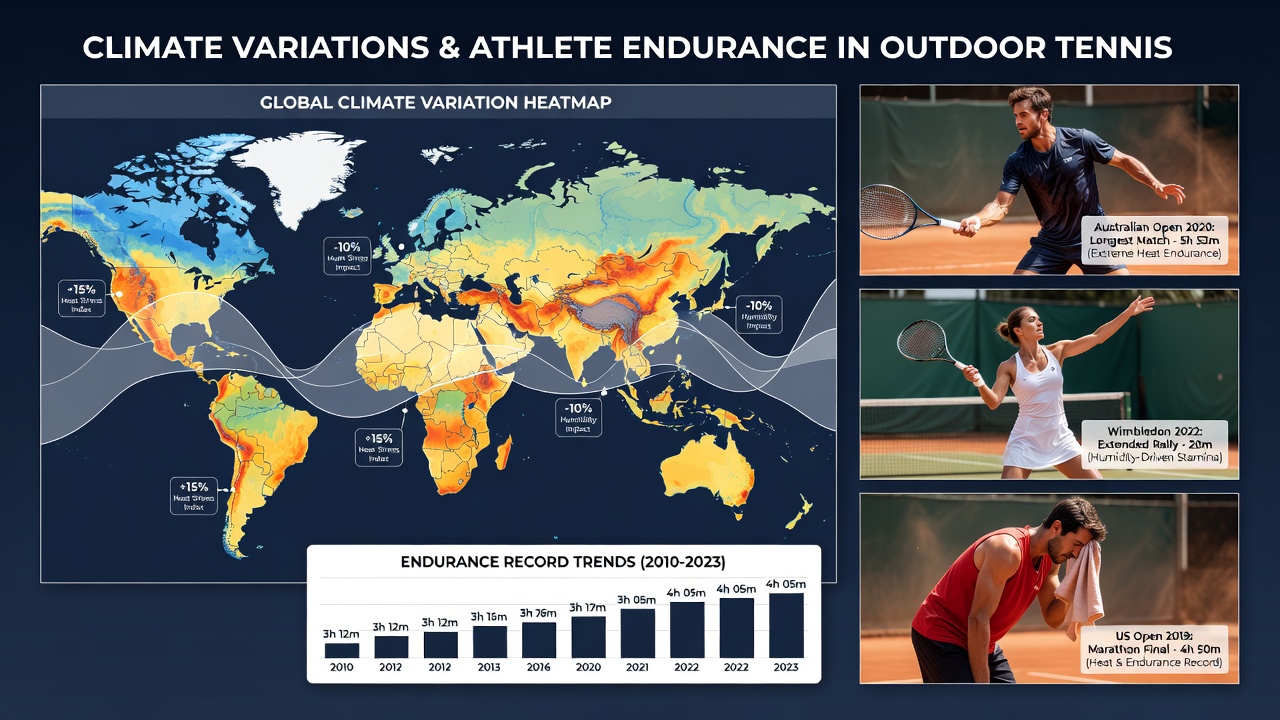 Further analysis from Canadian research institutions demonstrates that coastal tournament sites experience different endurance profiles than inland locations because sea breezes moderate peak heat loads. Records set during October 2026 events will likely undergo similar scrutiny once full climate logs become available, allowing direct comparisons against prior seasons.
Performance Threshold Patterns
Longitudinal tracking of match lengths and round completion times reveals clear thresholds where climate factors begin to influence record-setting attempts. Tennis endurance benchmarks, such as five-set matches exceeding four hours, cluster more frequently in subtropical zones during peak humidity months while golf endurance metrics like sub-par rounds completed without fatigue-related errors appear concentrated in temperate regions. Analysts cross-reference these occurrences against mapped climate grids to identify venues that consistently produce outlier performances.
Industry reports from the International Tennis Federation and PGA Tour archives supply the underlying statistics, and cross-referencing with climate archives shows that temperature swings greater than 8 degrees Celsius within a single day correlate with increased variance in endurance outcomes. Athletes who compete across both sports circuits encounter these mapped patterns repeatedly, and preparation strategies have evolved to account for regional climate signatures rather than relying solely on general conditioning.
Conclusion
Climate mapping initiatives continue to refine understanding of how environmental conditions intersect with physical output in outdoor tennis and golf settings. Datasets compiled through 2026 and beyond will provide additional layers of detail for identifying endurance records that emerge under specific temperature, humidity and wind combinations. Researchers maintain ongoing efforts to expand these analytical frameworks across additional tournament locations worldwide.