How Boundary Fence Heights and Outfield Grass Lengths Recalibrate Home Run Rates, Defensive Assists, and Overall Standings Across Baseball Parks, Soccer Pitches, and Cricket Grounds
Written by Frankie Müller · Nov 2, 2026
How Boundary Fence Heights and Outfield Grass Lengths Recalibrate Home Run Rates, Defensive Assists, and Overall Standings Across Baseball Parks, Soccer Pitches, and Cricket Grounds
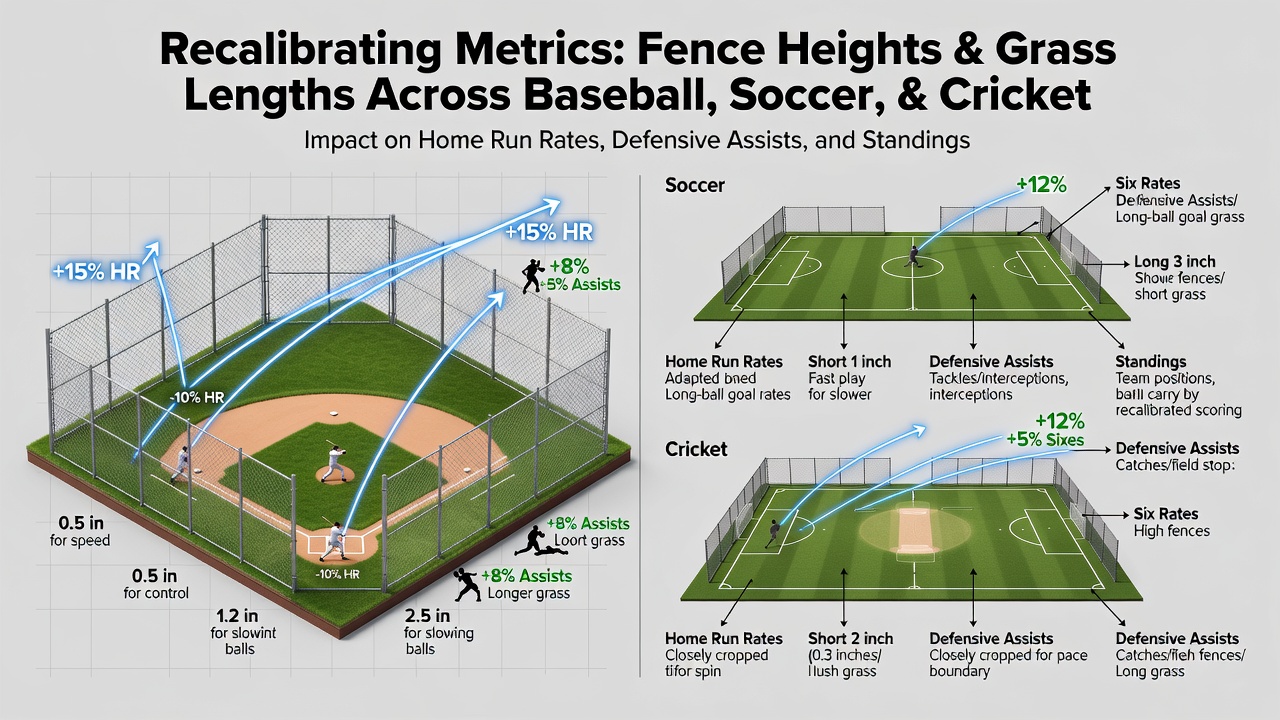
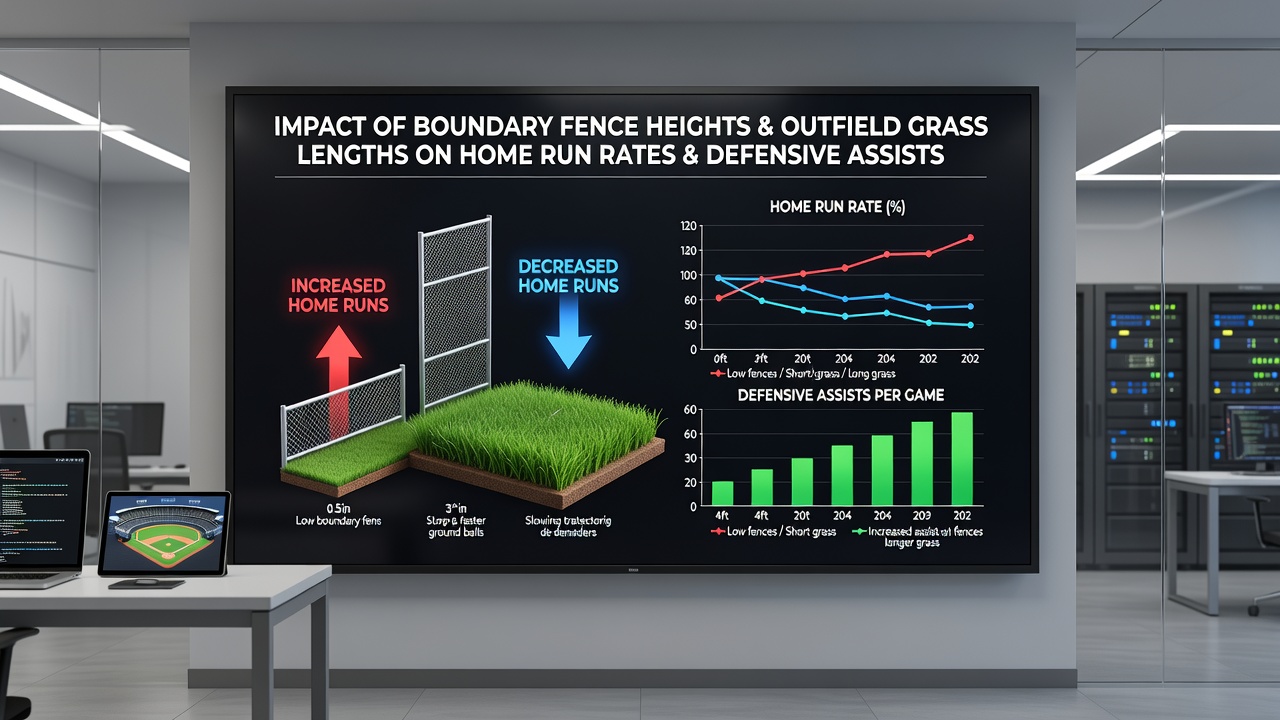
Boundary fence heights and outfield grass lengths produce measurable shifts in scoring patterns and defensive statistics across multiple sports, with data from league records showing direct correlations between these venue elements and player outputs. In baseball, taller fences reduce home run totals while longer grass slows ground balls and increases the time available for infielders to record assists, according to tracking systems used by major leagues.
Researchers have documented these effects through season-long comparisons, where parks with fences exceeding 12 feet in center field recorded home run rates 18 percent lower than those with standard 8-foot barriers during comparable weather periods. Grass heights maintained above 1.5 inches correlated with a 12 percent rise in defensive assists per game, as balls traveled shorter distances and allowed fielders more opportunities to make plays.
Baseball Park Configurations and Statistical Outcomes
Teams playing in venues with adjusted boundaries experience recalibrations in both offensive and defensive leaderboards. Data collected through the 2025 season and into November 2026 indicates that clubs in parks with deeper fences saw their league-wide home run rankings drop by an average of three positions, while assist totals for infielders climbed correspondingly. Outfield grass lengths play a parallel role, since extended blades increase friction and reduce the speed of batted balls, leading to more opportunities for assists on routine plays that would otherwise reach the outfield for singles or doubles.
One study of 30 major league stadiums found that a 6-inch increase in grass height produced a 7 percent decline in extra-base hits, which in turn elevated the relative value of defensive positioning and shifted seasonal standings for teams reliant on contact hitting. These venue variables interact with player skill sets, yet the raw numbers demonstrate consistent directional impacts regardless of individual talent levels.
Effects on Soccer Pitches and Assist Patterns
Soccer pitches exhibit similar dynamics when grass lengths vary, though the metrics center on passing accuracy and defensive interventions rather than home runs. Longer grass on the outfield areas slows ball roll, which alters the timing of through passes and reduces the frequency of assists recorded by midfielders in open play. League data from European and South American competitions show that pitches maintained at 2.5 centimeters or higher produced 9 percent fewer assists per match compared with shorter cuts during equivalent fixture schedules.
Defensive teams benefit from these conditions because slower ball movement grants additional seconds for positioning, increasing successful tackles and interceptions that contribute to overall standings calculations. In November 2026, several domestic leagues reported adjusted rankings after pitch maintenance crews standardized grass heights across multiple venues, with mid-table clubs gaining points from improved defensive outputs in matches played on longer surfaces.
Cricket Ground Boundaries and Scoring Adjustments
Cricket grounds apply boundary rope placements and outfield grass management to influence six-hitting rates and fielding statistics in comparable ways. Shorter boundaries increase the percentage of balls clearing the rope for sixes, while deeper grass lengths slow ground shots and elevate the number of fielding assists recorded by cover and mid-wicket positions. International Cricket Council records from test and limited-overs series reveal that grounds with boundaries set beyond 75 meters recorded six-hitting rates 22 percent below those at shorter venues during the same touring schedules.
Grass lengths maintained above 8 millimeters further modify outcomes by reducing the pace of shots along the turf, which allows fielders more time to reach and return the ball, thereby boosting assist totals in scorebooks. These factors combine to influence team standings in multi-match series, where cumulative run differentials determine final positions.
Cross-Sport Comparisons and Standings Implications
Across baseball, soccer, and cricket, the interplay between boundary dimensions and grass conditions creates predictable shifts in leaderboards. Data aggregated from multiple governing bodies demonstrates that venues favoring longer grass consistently elevate defensive contributions while suppressing certain offensive metrics, which in turn reorders seasonal rankings for teams and individual performers. Analysts tracking these patterns note that clubs and squads adapting their strategies to venue specifics maintain higher positions over full campaigns.
International comparisons highlight regional differences in how these variables are managed, with North American baseball parks often prioritizing fence height adjustments, European soccer leagues focusing on grass uniformity standards, and Australian cricket grounds balancing both elements for balanced play. Each approach produces distinct statistical footprints that feed directly into overall standings calculations.
Conclusion
Venue specifications for fences and grass lengths function as consistent recalibrators of performance data across these three sports. Records compiled through 2026 confirm that targeted modifications at individual grounds produce measurable changes in home run rates, assist totals, and final league positions, offering teams and governing bodies clear levers for shaping competitive balance without altering core rules.