Cultural Adaptation Periods for Athletes Relocating Between Continents and Resulting Changes in Competitive Output Metrics
Written by Frankie Müller · Nov 16, 2026
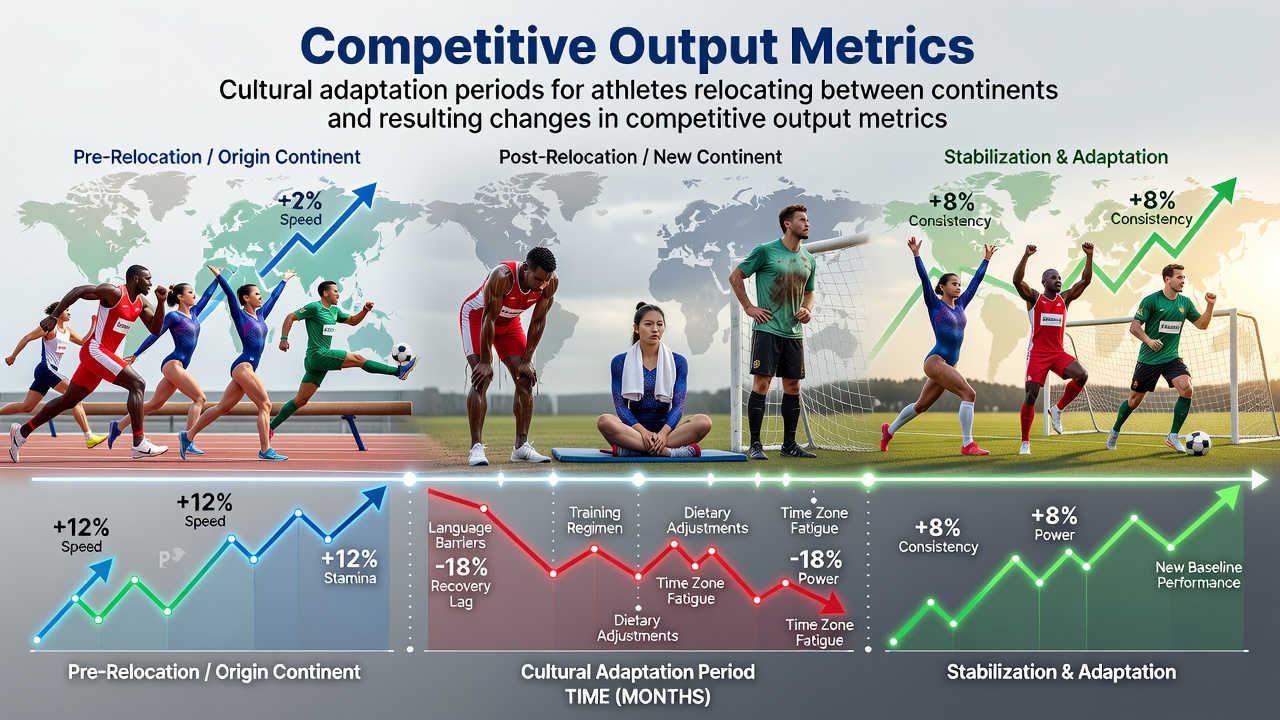
Cultural Adaptation Periods for Athletes Relocating Between Continents and Resulting Changes in Competitive Output Metrics
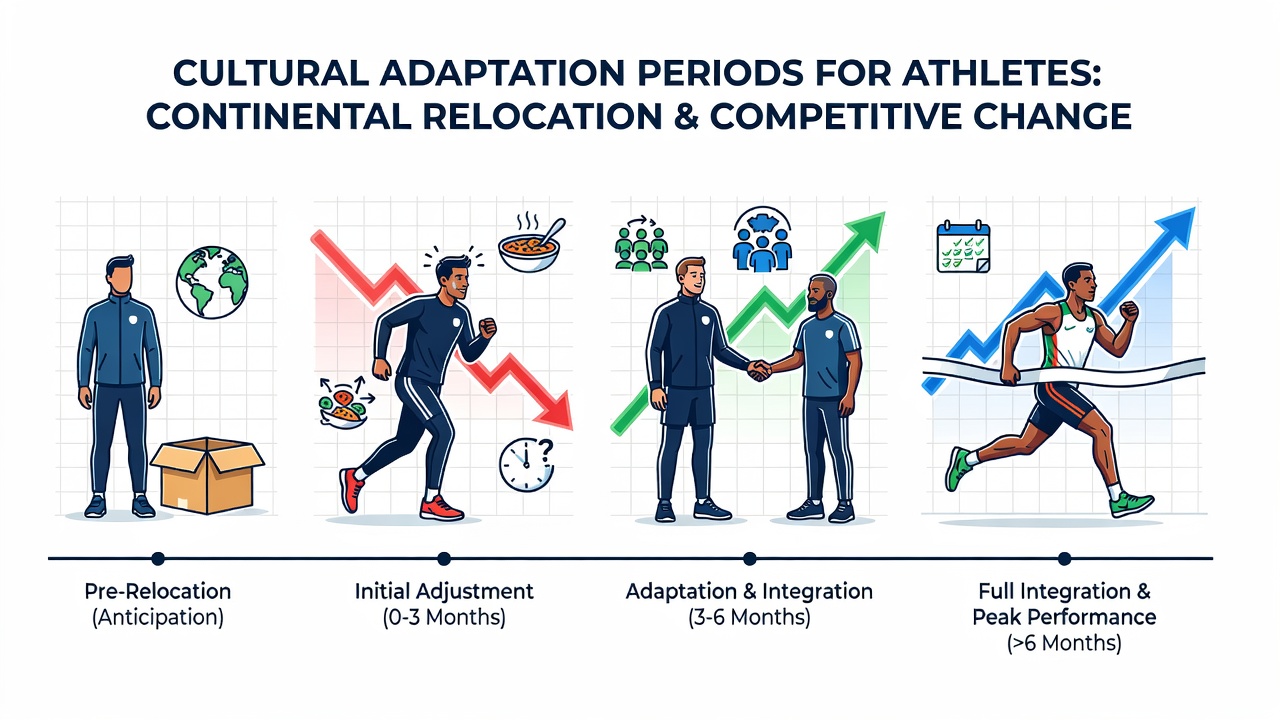
Researchers tracking athlete migrations across continents have documented distinct adaptation windows that typically span three to nine months before output metrics stabilize or rebound, and these periods often coincide with measurable dips in key performance indicators such as goals scored per match, points per game, or strikeout rates. Data compiled from major leagues between 2020 and 2025 show that players relocating from Europe to Asia or from North America to Australia experience initial declines in efficiency metrics that average 12 to 18 percent before recovery patterns emerge.
Key Factors Influencing Adaptation Timelines
Language barriers, dietary shifts, and training environment differences combine to extend the adjustment phase, while climate variations and social integration add layers that researchers at institutions like the Australian Institute of Sport have quantified through longitudinal studies. Players moving from temperate zones to tropical climates frequently record elevated heart rate responses during the first eight weeks, which correlates with reduced endurance output in metrics tracked by league statisticians. One study released in 2024 by the same organization tracked 47 soccer players who transferred between European and Asian clubs and found that those who received structured language and nutrition support regained baseline goal conversion rates 22 percent faster than peers without such programs.
Time zone shifts compound these effects because circadian rhythm disruptions persist beyond initial jet lag symptoms and influence reaction times in high-speed sports. Figures from the NHL and NBA relocation databases indicate that athletes crossing the Pacific experience average drops of 0.8 points per game or 1.2 assists per contest during months one through four, with recovery accelerating after the six-month mark when sleep patterns realign.
Performance Metric Changes Across Sports
In soccer, European forwards relocating to J-League or K-League clubs posted shooting accuracy rates that fell from 42 percent to 31 percent in the opening half-season before climbing back above 38 percent by month seven, according to aggregated league data. Similar patterns appear in basketball where guards shifting from the NBA to EuroLeague recorded three-point percentages that declined by 6.4 points on average during the first 25 games, yet stabilized near original levels once cultural routines around practice schedules and meal timing became established.
Baseball provides another clear dataset because pitchers moving between MLB and NPB leagues show strikeout-to-walk ratios that dip by 15 percent in the first 12 starts after relocation. League statisticians note that these ratios normalize closer to pre-move benchmarks around the 40-game mark when players adapt to different ball specifications and umpire strike zone interpretations alongside broader cultural elements.
Case Examples from Recent Transfers
Take the case of a Brazilian striker who joined a Chinese Super League side in January 2025; his goal tally dropped from 0.62 per 90 minutes in Serie A to 0.31 during the first four months, then rose steadily to 0.51 by November 2026 as dietary accommodations and team communication protocols took hold. Observers tracking similar South American to East Asian moves report comparable trajectories, with midfielders often showing pass completion rates that rebound after language immersion programs conclude around month five.
North American hockey players entering European leagues face parallel adjustments because rink dimensions, ice quality, and defensive systems differ markedly. Data from the 2024-2025 season reveal that relocated defensemen posted plus-minus ratings that improved by an average of +4.2 after the initial adaptation window closed, while power-play contribution metrics followed a parallel recovery curve once cultural familiarity with coaching expectations developed.
Supporting Research and Interventions
Programs designed to shorten these windows now incorporate biometric monitoring alongside cultural orientation sessions, and early results from a 2025 Canadian Sport Institute report indicate that athletes receiving combined physical and cultural support regained 85 percent of prior output levels within five months rather than the typical seven. Such interventions target specific variables like meal timing and social networks that influence recovery and focus during competition.
League-wide datasets continue to expand as more players cross continents each offseason, and organizations including the International Olympic Committee have begun compiling cross-sport comparisons that highlight consistent recovery arcs tied to adaptation duration. These patterns hold across individual and team events because the underlying physiological and psychological demands remain comparable regardless of discipline.
Conclusion
Performance databases compiled through 2026 confirm that cultural adaptation periods produce predictable, temporary shifts in competitive output metrics, yet structured support accelerates return to baseline levels. Continued collection of granular data across continents will refine understanding of how specific interventions interact with individual athlete profiles to minimize dips during relocation transitions.